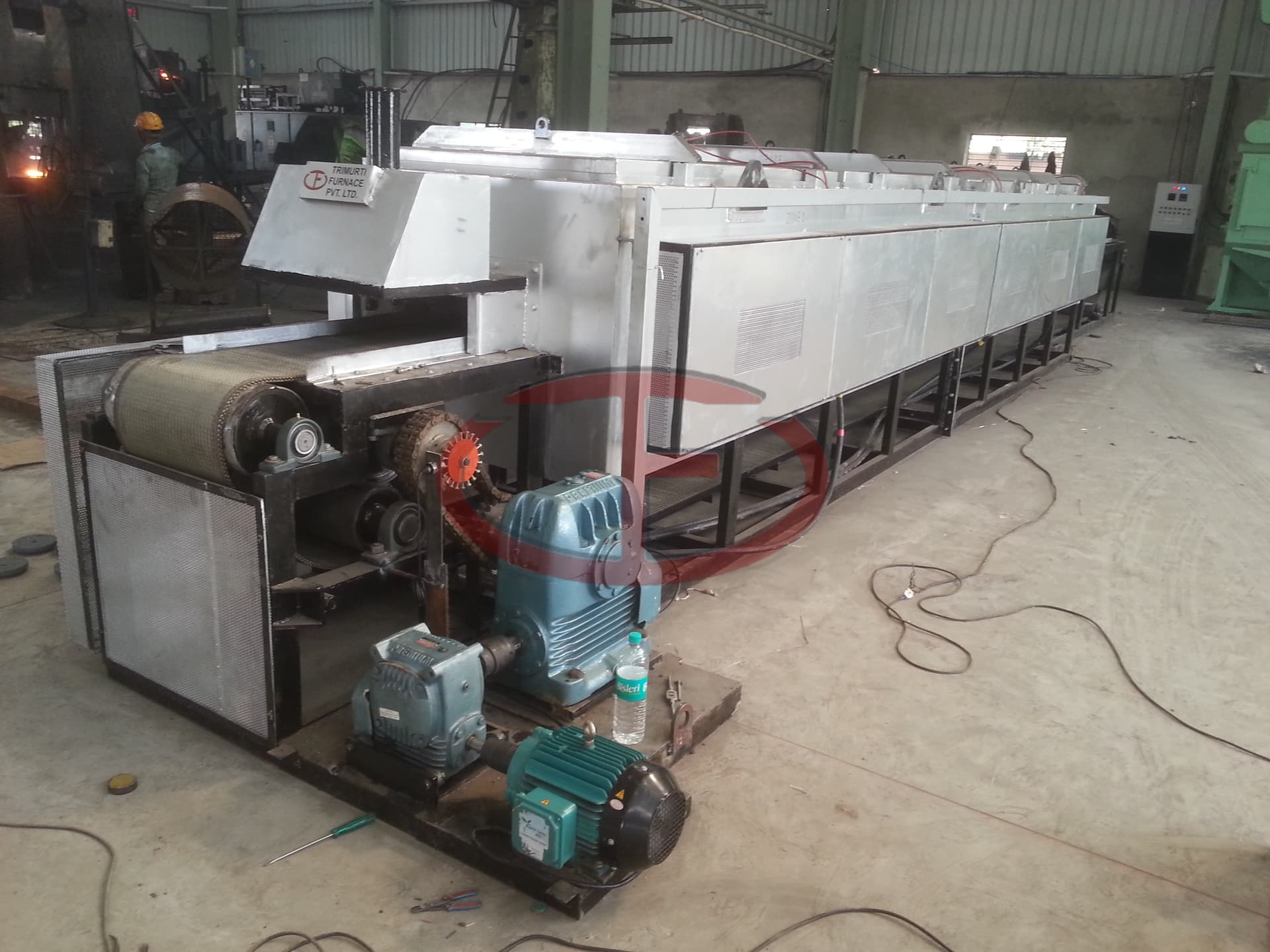
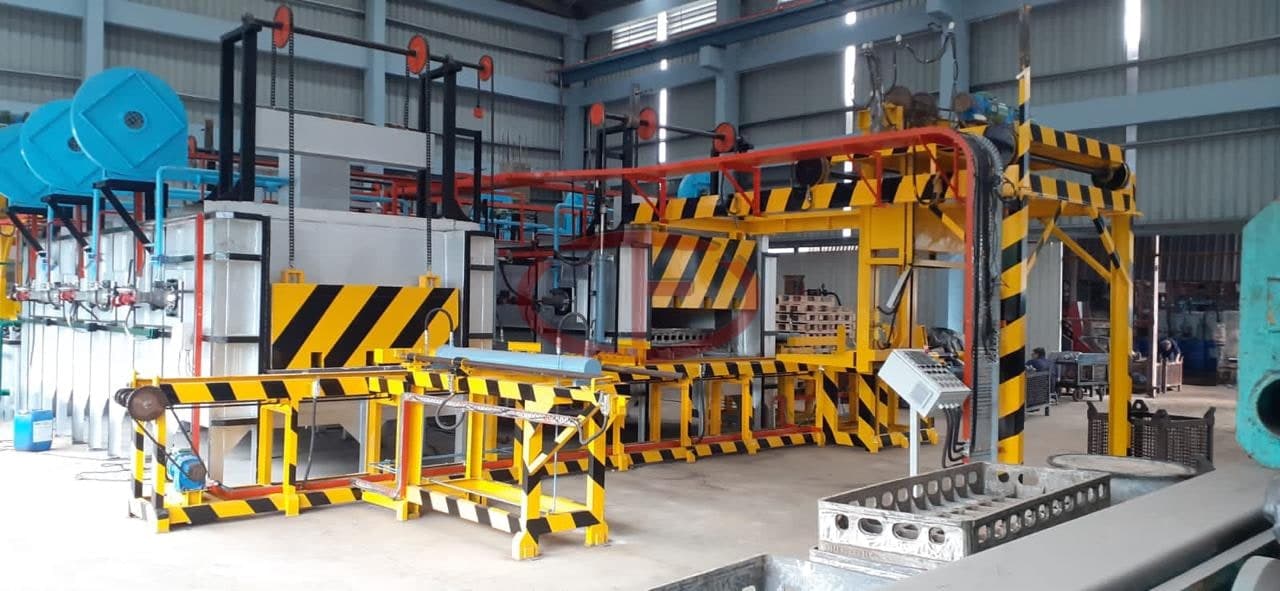
Tunnel Kilns & Pusher Furnaces
Continuous Mesh-Belt Hardening & Tempering Line
A fully automatic line that hardens, quenches, washes and tempers small steel parts on a moving mesh belt, at 140–150 kg per hour, with no handling between stations.
Also known as: Mesh belt furnace, Mesh belt hardening furnace, Conveyor belt hardening furnace, Continuous hardening furnace
Overview
The Continuous Mesh-Belt Hardening & Tempering Line is designed and built by Trimurti Furnace in Nashik, India, for fasteners, pins, springs and chain parts. It is offered with a loading capacity of 140–150 kg/hr. Capacity can be changed as per your requirement. Each furnace is engineered to the customer's parts and throughput by Trimurti Furnace Pvt. Ltd., an ISO 9001-certified manufacturer since 1991.
Parts are loaded once at the entry end. The belt carries them through a sealed, atmosphere-controlled hardening furnace, drops them into an oil quench, lifts them through a hot-water washer and on through a three-zone tempering furnace. One PLC + SCADA system runs and logs the whole line.
Engineering Perspective
One belt in. Finished parts out.
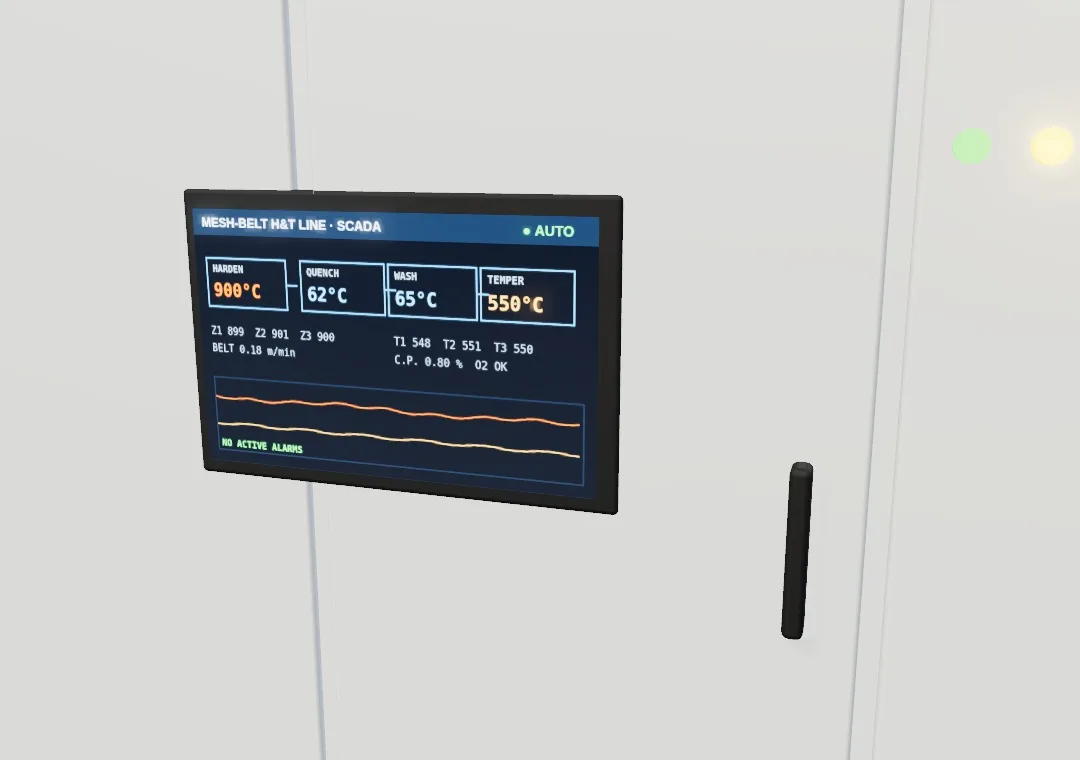
Hardening, quench, wash and temper usually mean four machines and three rounds of handling. On this line the belt never stops: parts go in raw at one end and come out hardened, tempered and clean at the other, with every zone temperature, belt speed and alarm logged on one SCADA screen.
- 140–150 kg/hr, running day and night
- Carbon-controlled atmosphere — no soft skin, no scale
- Oil quench and wash built into the line
- Every batch traceable on PLC + SCADA
The Process
From raw steel to tempered
One belt in. Finished parts out. Eight stations, one moving belt, no handling in between.
- 01
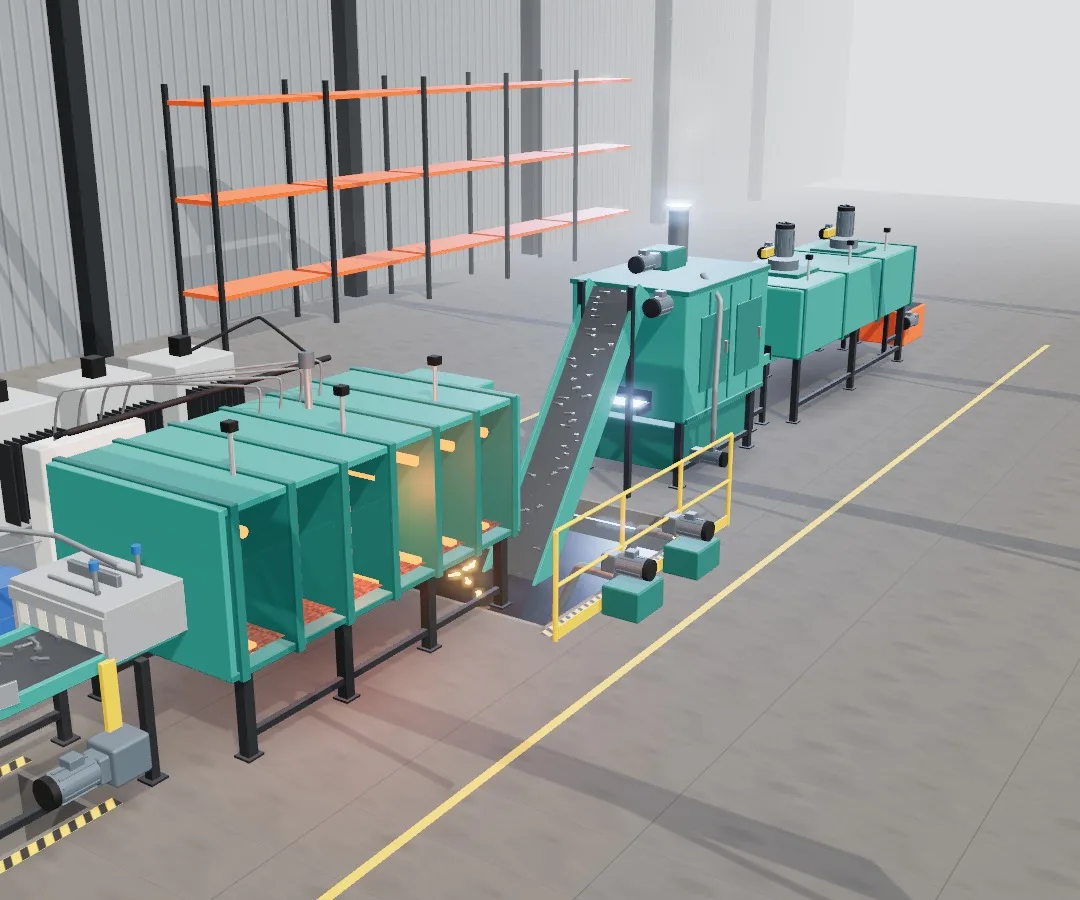
Loading
Parts are spread on a stainless steel mesh belt. A variable-speed drive sets how long they stay in the heat.
WhyA thin, even layer means every part gets the same heat.
- 02
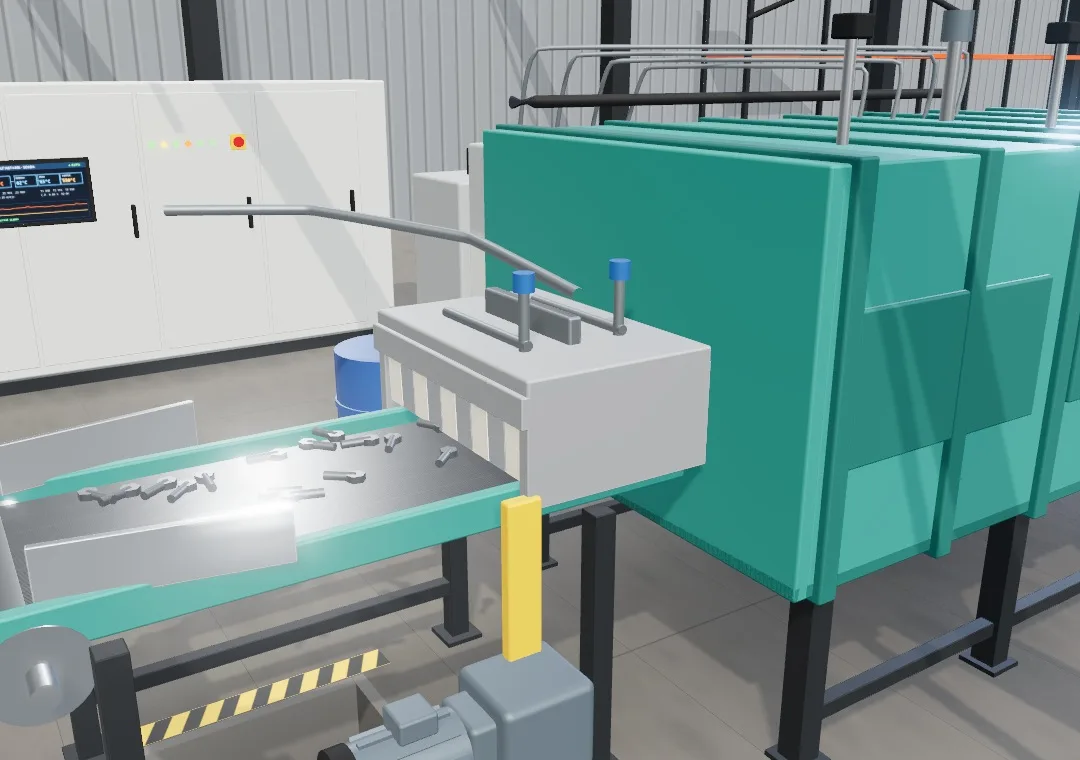
Entry seal
Nitrogen curtains and steel-foil curtains seal the furnace entry.
WhyHot steel reacts with air: it forms scale and loses surface carbon.
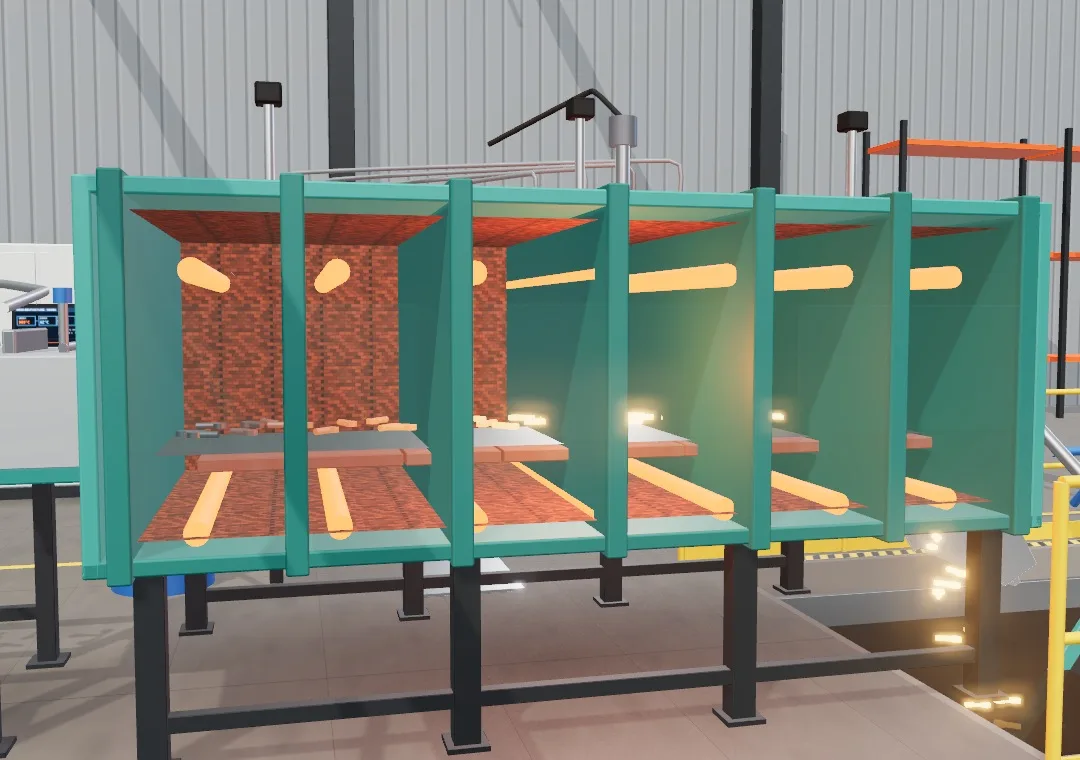
- 03
Hardening
Three electrically heated zones bring the parts to 900 °C. The belt runs over silicon-carbide hearth tiles.
WhyAt this temperature the steel's structure changes, ready to be hardened.
- 04
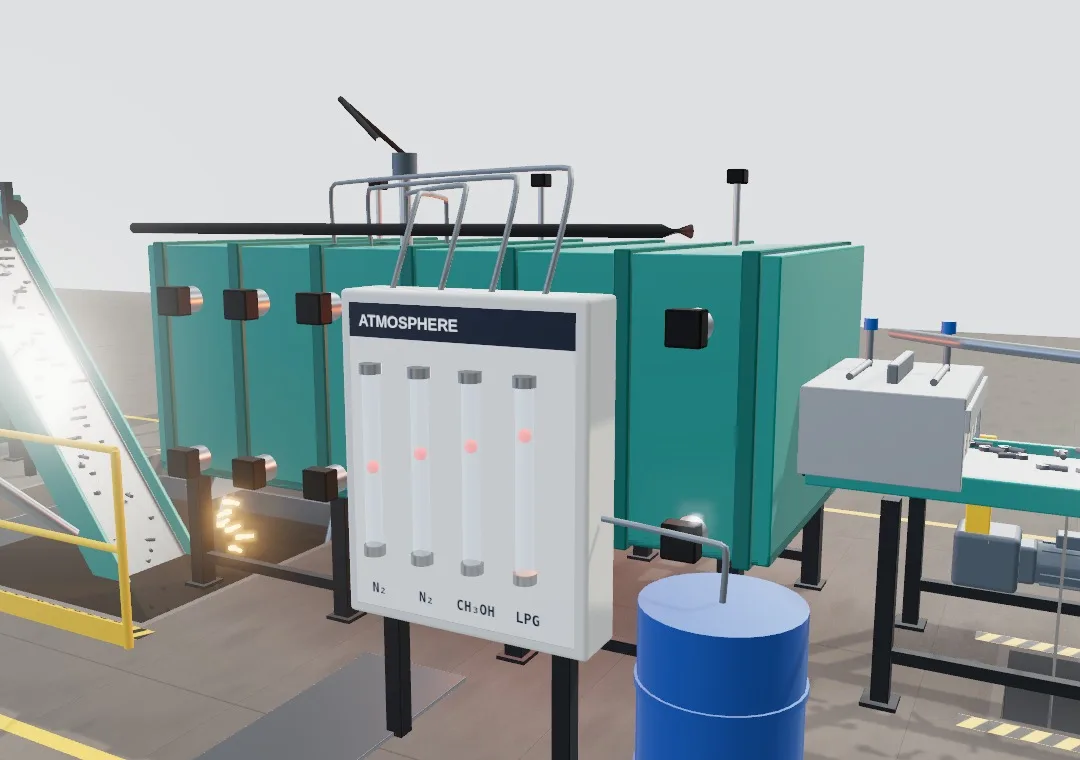
Atmosphere control
Methanol and LPG are added through flow meters. An oxygen probe checks the gas and corrects it automatically.
WhyThe part keeps the right surface carbon, so there is no soft skin.
- 05
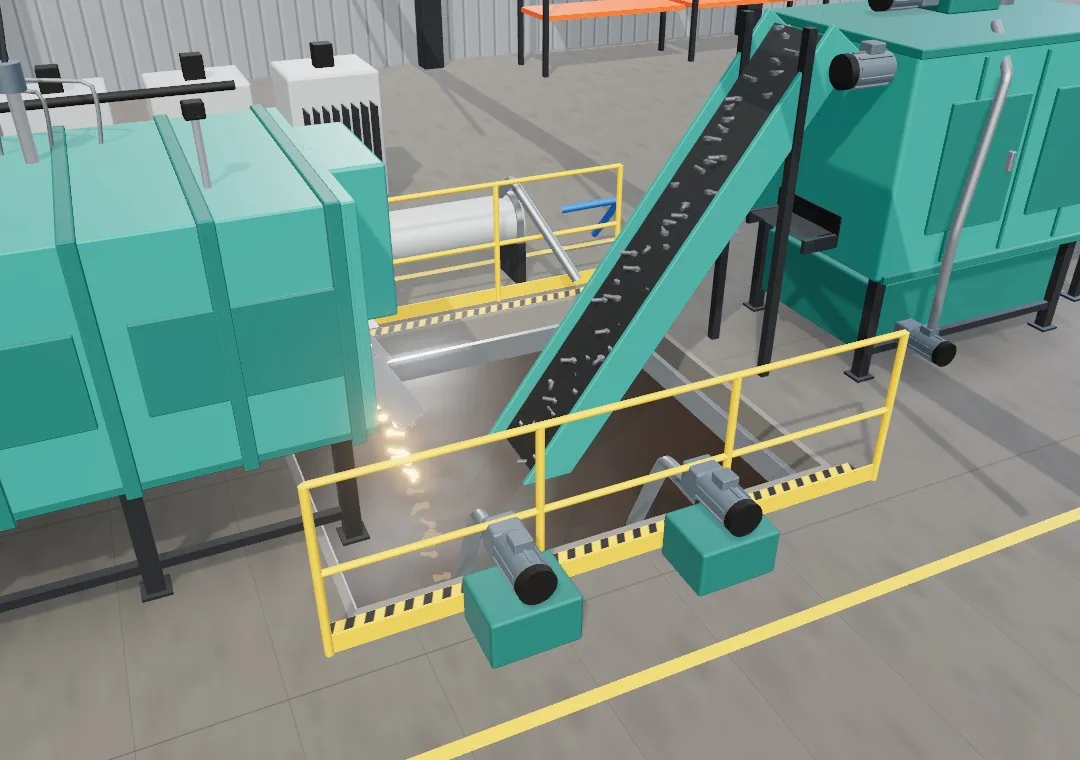
Oil quench
Parts fall straight into 3,800 litres of moving quench oil, and a conveyor lifts them out.
WhyFast, even cooling makes parts hard all the way through, with less distortion.
- 06
Washing
A hot-water spray washer removes quench oil.
WhyClean parts temper evenly, with no smoke or residue.
- 07
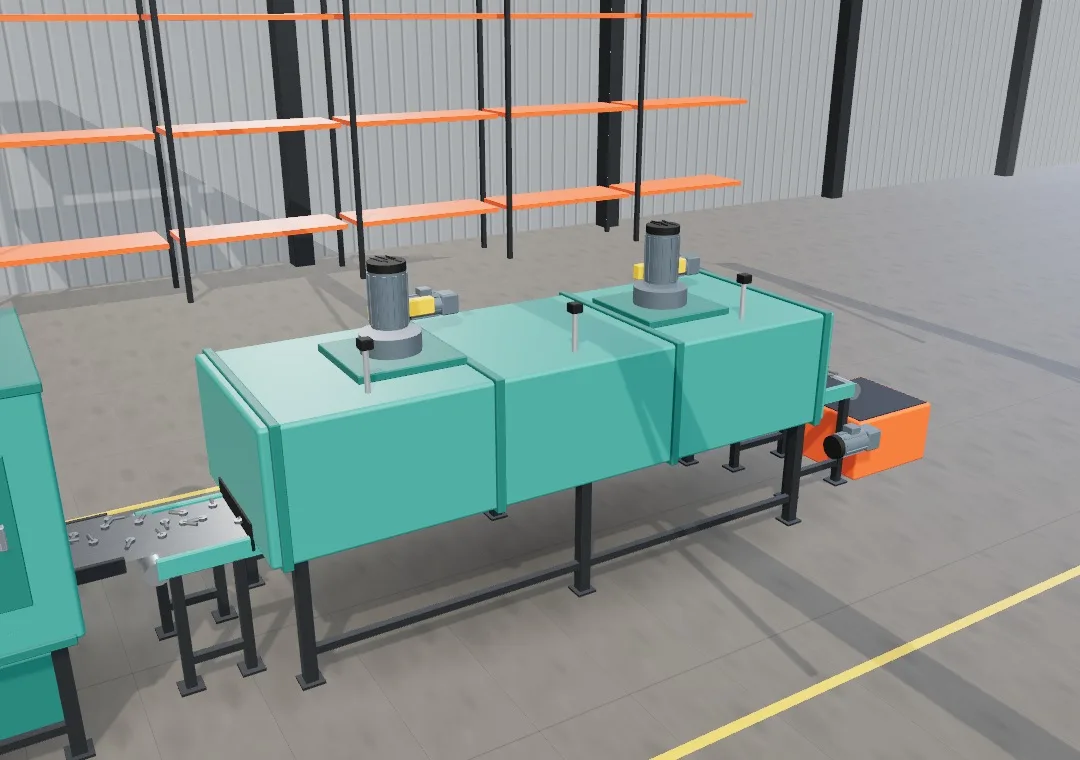
Tempering
Three zones at 450–700 °C, with fans circulating hot air through the load.
WhyHardened steel is strong but brittle. Tempering makes it tough enough to use.
- 08
Control & SCADA
One PLC + SCADA screen runs hardening, washing and tempering, and logs every zone, belt speed and alarm.
WhyEvery batch is traceable, and problems are caught before they cause rejects.
Technical Data
Line specifications
Figures below are for a 140–150 kg/hr reference line. Capacity is variable: belt width, heated length and zone power are sized to each customer's parts and output.
Hardening furnace
09- Type
- Mesh-belt conveyor, electric heating
- Capacity
- 140–150 kg/hr (reference build)
- Temperature
- 900 °C operating, 950 °C max
- Heating
- Radiant tubes with bayonet elements (Ni-Cr 80:20), 3 zones, 110 kW
- Inside size
- 800 W × 4000 L × 100 H mm
- Heated length
- 3650 mm, plus a 1000 mm entry
- Part size
- Up to 300 mm long, 20 mm diameter
- Hearth
- Silicon-carbide tiles
- Atmosphere
- Methanol + LPG, oxygen-probe carbon control, nitrogen curtains
Oil quench
04- Oil tank
- 3,800 litres
- Oil cooling
- Heat exchanger
- Agitation
- Pump for oil movement and spray curtain
- Lift-out
- Conveyor belt
Tempering furnace
07- Type
- Mesh-belt conveyor, electric heating
- Capacity
- 150–180 kg/hr (reference build)
- Temperature
- 450–700 °C
- Heating
- 3 zones, 60 kW
- Inside size
- 700 W × 4000 L × 100 H mm
- Air circulation
- Centrifugal fans
- Belt speed
- 5–50 mm/min, adjustable
Control & safety
03- Controls
- PLC + SCADA on a panel-mounted industrial PC
- Temperature control
- Thyristor control on every zone, K-type thermocouples
- Safety
- Over-temperature protection, poka-yoke interlocks, alarms for belt stop, pump stop and water temperature
Applications
Built for these processes
- Fasteners
- Pins
- Springs
- Chain parts
- Bearing parts
- Small shafts
Key Features
What sets it apart
- Even heating — parts spread thin on a moving belt get the same heat
- Accurate control — each zone holds its set temperature closely
- Lower power use — good insulation and sealed tubes lose less heat
- High output — runs non-stop, day and night
- Fully automatic — loading to unloading runs as one line
- Easy servicing — heating elements can be replaced from outside while the furnace stays hot
Questions
Continuous Mesh-Belt Hardening & Tempering Line — FAQ
Who manufactures the Continuous Mesh-Belt Hardening & Tempering Line in India?
Trimurti Furnace Pvt. Ltd. designs and manufactures the Continuous Mesh-Belt Hardening & Tempering Line in-house at its works in Ambad MIDC, Nashik, with a further plant at MIDC Chakan, Pune, Maharashtra. The company has built industrial furnaces since 1991, is ISO 9001 certified and has exported furnaces since 2005.
What else is the Continuous Mesh-Belt Hardening & Tempering Line called?
It is also known as mesh belt furnace, mesh belt hardening furnace, conveyor belt hardening furnace and continuous hardening furnace. Trimurti Furnace builds it in Nashik, India.
What loading capacity does the Trimurti Continuous Mesh-Belt Hardening & Tempering Line handle?
140–150 kg/hr. Capacity can be changed as per your requirement. Chamber size and heating load are engineered to each customer's parts and throughput.
What is the maximum temperature of the Continuous Mesh-Belt Hardening & Tempering Line?
Hardening temperature: 900 °C (max 950 °C).
What is the Continuous Mesh-Belt Hardening & Tempering Line used for?
It is used for fasteners, pins, springs, chain parts, bearing parts and small shafts, and is part of Trimurti Furnace's range of tunnel kilns & pusher furnaces.
How is the Continuous Mesh-Belt Hardening & Tempering Line heated?
Electric.
Does Trimurti Furnace provide installation, service and spares for the Continuous Mesh-Belt Hardening & Tempering Line?
Yes. Every furnace is installed and commissioned by Trimurti engineers, with operator training and annual maintenance contracts. Spares such as heating elements, radiant tubes, thermocouples, oxygen probes, retorts, mesh belts and refractory are supplied for furnaces already in service.
How do I get a quotation for the Continuous Mesh-Belt Hardening & Tempering Line?
Send an enquiry through the website, call or WhatsApp +91 91300 53323, or email info@trimurtifurnace.com. Share your parts, material, process and throughput, and Trimurti's engineers respond within one working day.
Same Category